

BaZi vs Star Sign vs Chinese Zodiac: Which Compatibility Method Is Most Useful?
A side-by-side comparison of BaZi marriage compatibility, Western astrology synastry, and Chinese zodiac pairing — covering analytical depth, data requirements, and practical value.
 AI Bazi fortune teller
When two people want to know whether they are "compatible," three methods come up most often: Chinese zodiac pairing, star sign compatibility, and BaZi marriage analysis. Their analytical logic and practical value differ significantly.
Chinese zodiac pairing: one dimension only
Chinese zodiac pairing uses only the year branch — the earthly branch of the year pillar in your BaZi chart.
- Strengths: simple, intuitive — everyone knows their zodiac animal
- Limitations: covers only 1/8 of the chart; conclusions like "Rat and Ox are compatible" are overly crude
- Best for: casual conversation, not serious decision-making
Star sign compatibility: emotional mapping
Western astrology synastry analyzes planetary aspects, house overlaps, and composite charts between two people.
- Strengths: nuanced emotional analysis, describes how interactions feel
- Limitations: leans toward "chemistry and vibes," less guidance for practical decisions
- Best for: understanding the emotional dynamics between two people
BaZi compatibility: multi-dimensional structured analysis
BaZi marriage compatibility examines Five Elements, Day Pillars, Ten Gods, and Dayun across both charts.
- Strengths: rich in dimensions, covers both feelings and practical interaction patterns
- Limitations: requires accurate birth hour, higher analytical threshold
- Best for: systematically understanding the strengths and challenges in a relationship
Side-by-side comparison
| Dimension | Zodiac pairing | Star sign synastry | BaZi compatibility |
|---|---|---|---|
| Data used | Minimal (1/8 of chart) | Moderate (planetary aspects) | Rich (full chart) |
| Analytical depth | Surface | Emotional layer | Structure + interaction |
| Input required | Birth year only | Precise birth time | Precise birth hour |
| Output format | Compatible or not | Interaction description | Multi-dimensional report |
| Actionability | Low | Medium | High |
Why BaZi compatibility is more practically useful
Zodiac and star sign pairing lean more toward "fun reference," while BaZi compatibility, with its broader dimensions, can offer more specific guidance — not just "are you compatible?" but "where do you complement each other, where are the friction points, and how do you navigate them?"
That is why MING chose BaZi compatibility as the core of its pairing analysis, while keeping a free preview so you can see the key findings before deciding whether to unlock the full report.
Recommended reading
BaZi Is Not Fatalism: Using Chinese Metaphysics for Self-Understanding
The real value of BaZi is not predicting the future — it is providing a structured framework for self-awareness. Learn why "destiny" does not mean "fixed."
Jul 10, 2026BaZi Marriage Compatibility: A Guide to Five Elements and Day Pillar Matching
Understand the core logic behind BaZi marriage compatibility — Five Element complementarity, Day Pillar relationships, and Ten Gods pairing — and how AI tools make it accessible.
Jul 2, 2026How to Read Your Daily Fortune: A Practical Guide Using Five Elements
Understand the Five Elements logic behind daily fortune readings. Learn how your Day Master interacts with each day to shape your energy rhythm.
Jul 1, 2026Chinese Birth Chart vs Western Astrology: Key Differences Explained
How does BaZi differ from Western astrology? A side-by-side comparison of structure, elements, timing cycles, and why some people find Chinese birth charts more specific.
Jun 22, 2026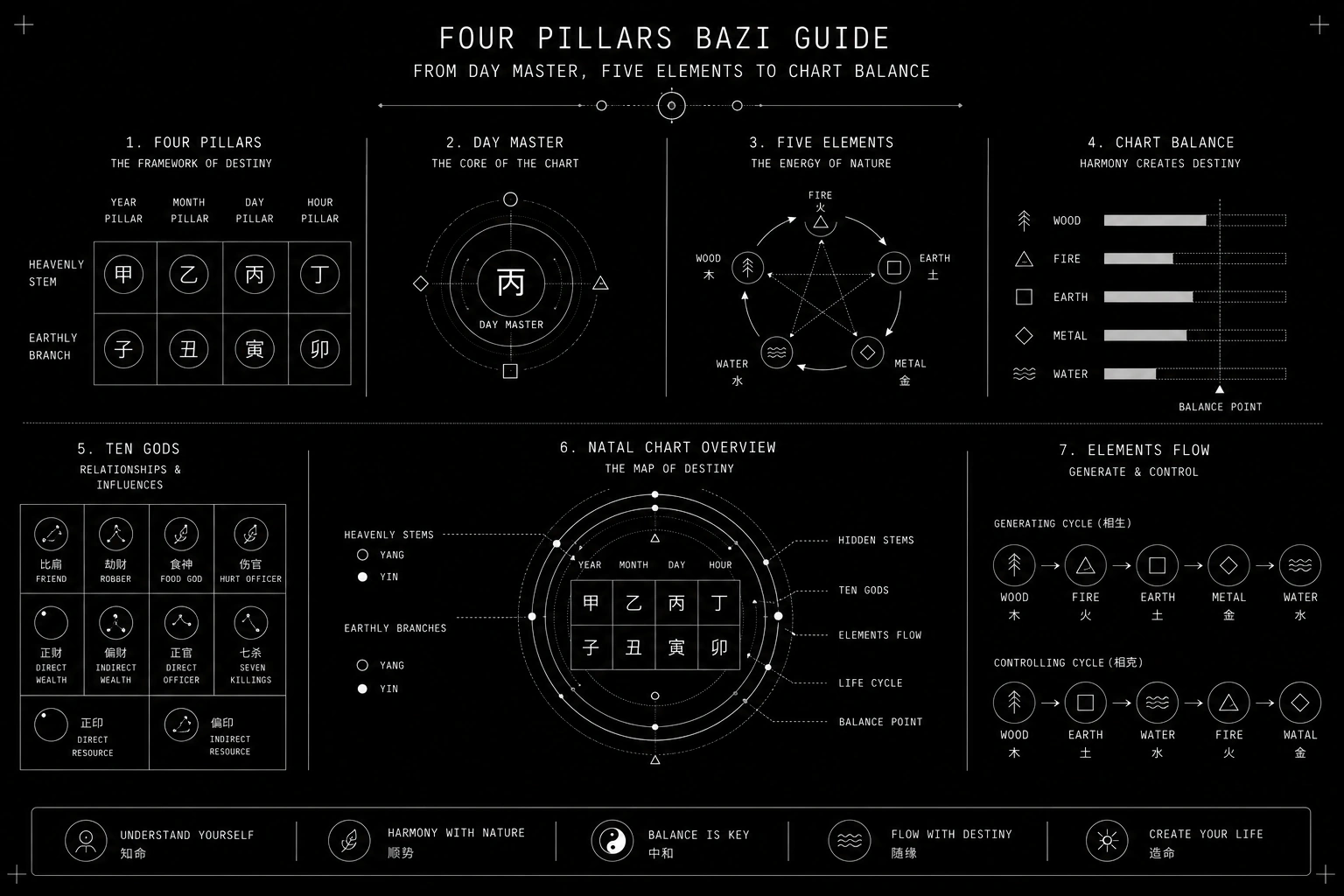
Four Pillars of Destiny Explained: A Practical Beginner Guide to BaZi
Learn how the Four Pillars of Destiny (BaZi) works — from Day Master and Five Elements to chart balance. A clear, modern introduction for beginners.
Jun 21, 2026AI Fortune Teller: What Makes a Reading Actually Feel Personal
Most AI fortune tellers produce generic text. Learn what separates a structured BaZi reading from random predictions, and how to spot the difference.
Jun 20, 2026